Food Stories
Touring Exhibition (2022)
Exhibition Design, Interpretation & Branding
Developed for the Museum of East Anglian Life during its transition to the Food Museum
About the exhibition
Food Stories was a touring exhibition celebrating East Anglian recipes, farming traditions, home cooking, and dialect words passed down through generations. Designed and delivered during the Museum of East Anglian Life’s transition to becoming the Food Museum, the project played a pivotal role in demonstrating how the rebrand could connect meaningfully with local communities.
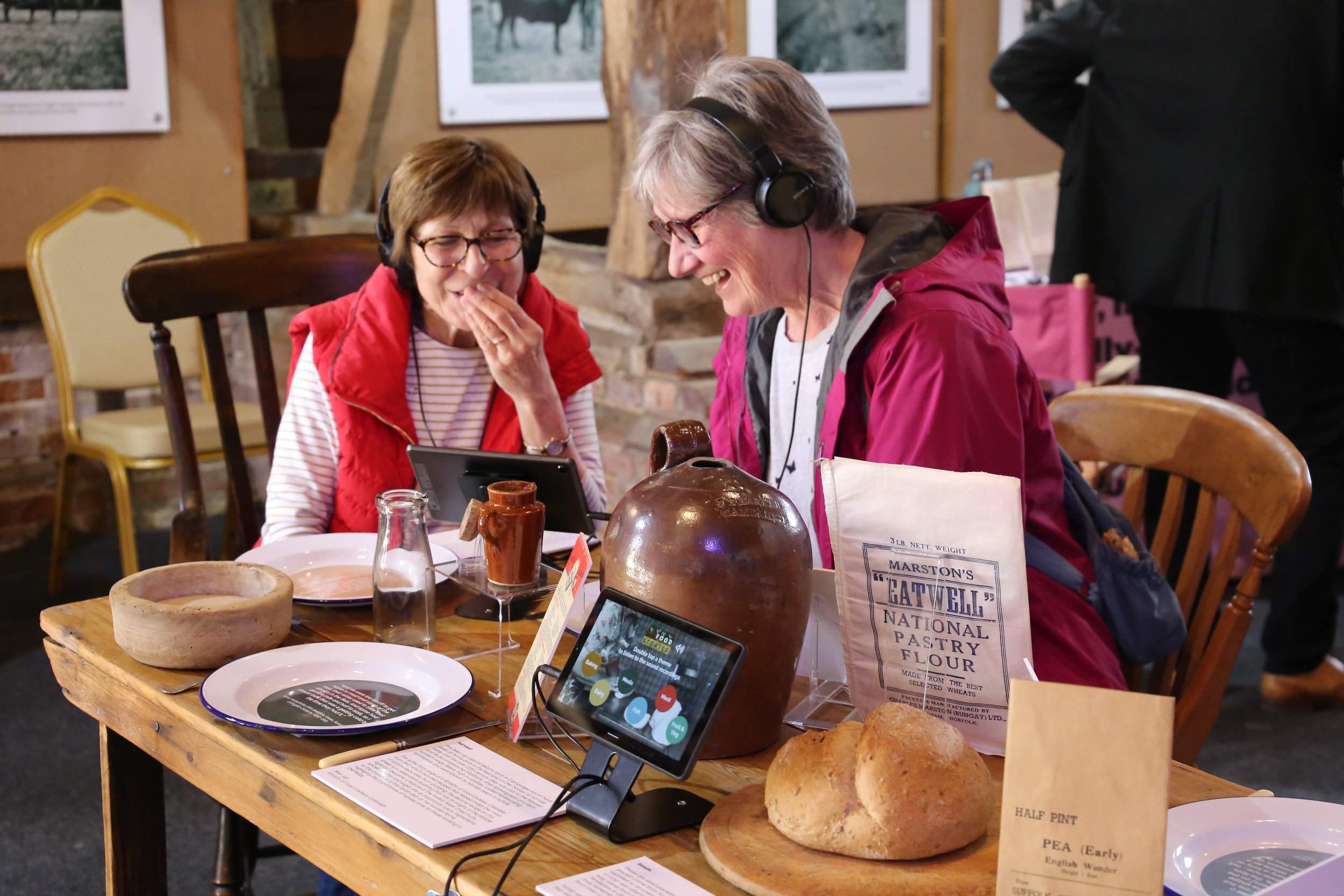
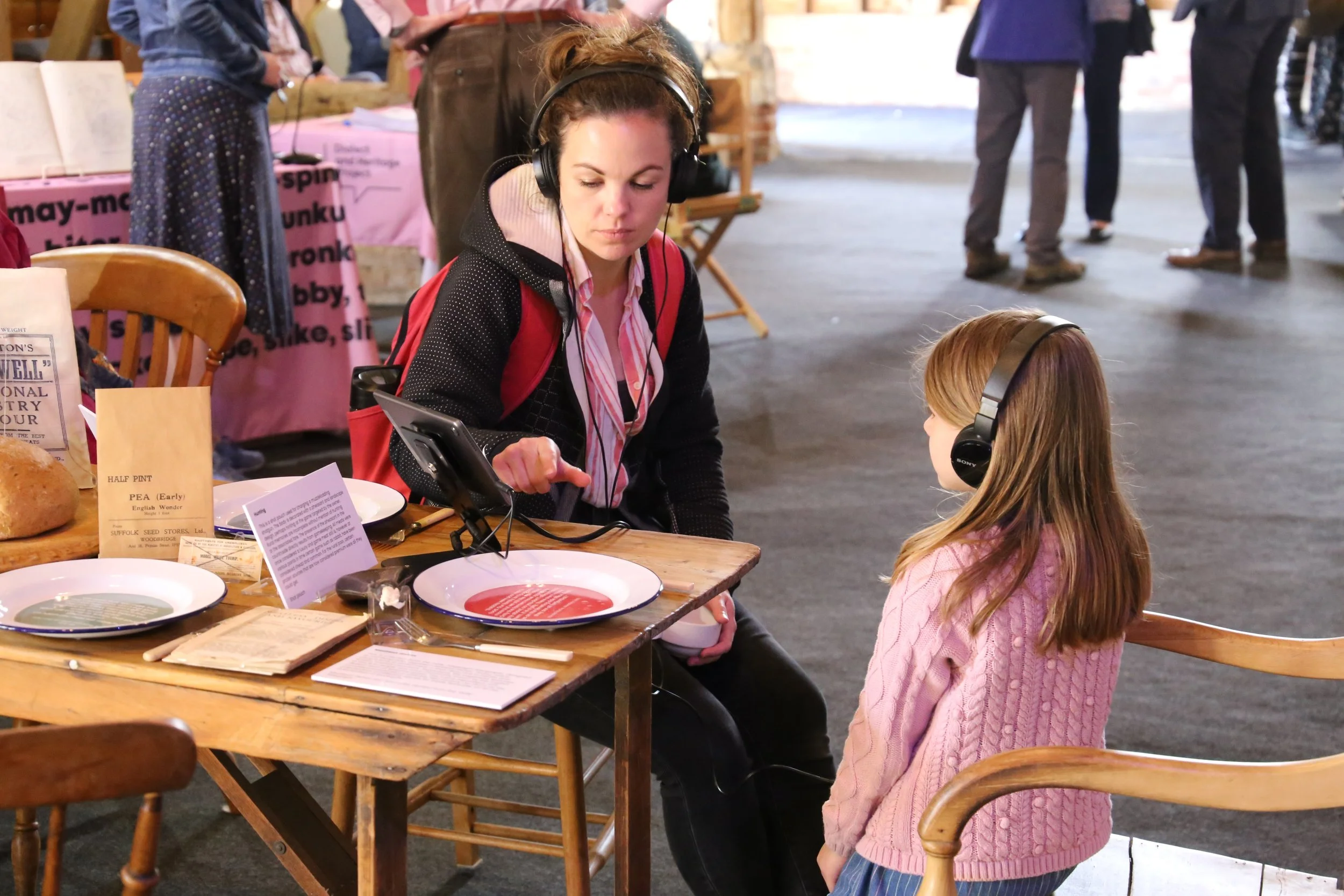
The exhibition centred around the idea of gathering—inviting visitors to sit together at a table, share memories, and reflect on the language and food traditions that shape regional identity.

Considerations
As a touring exhibition tied closely to a major institutional shift, the project required careful planning:
Communicating the values of a new museum identity while retaining trust and familiarity for local audiences.
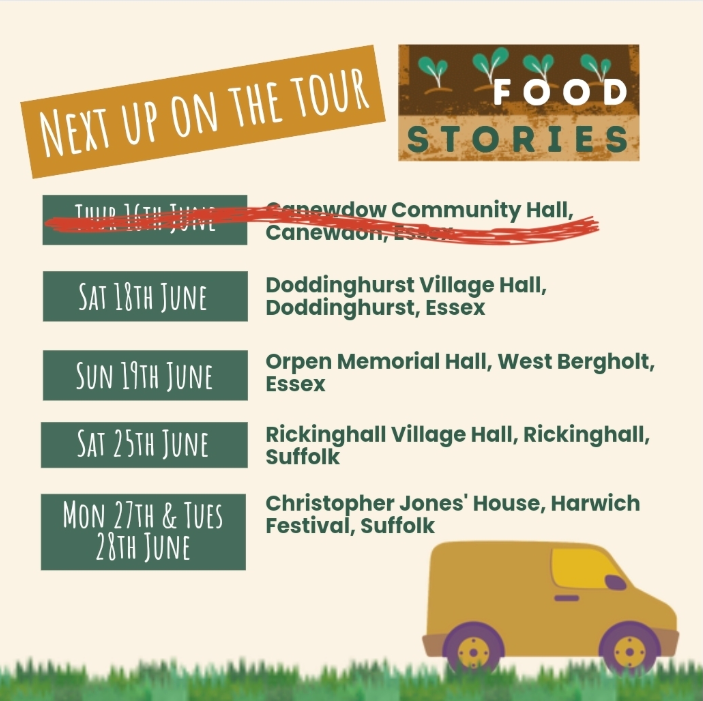
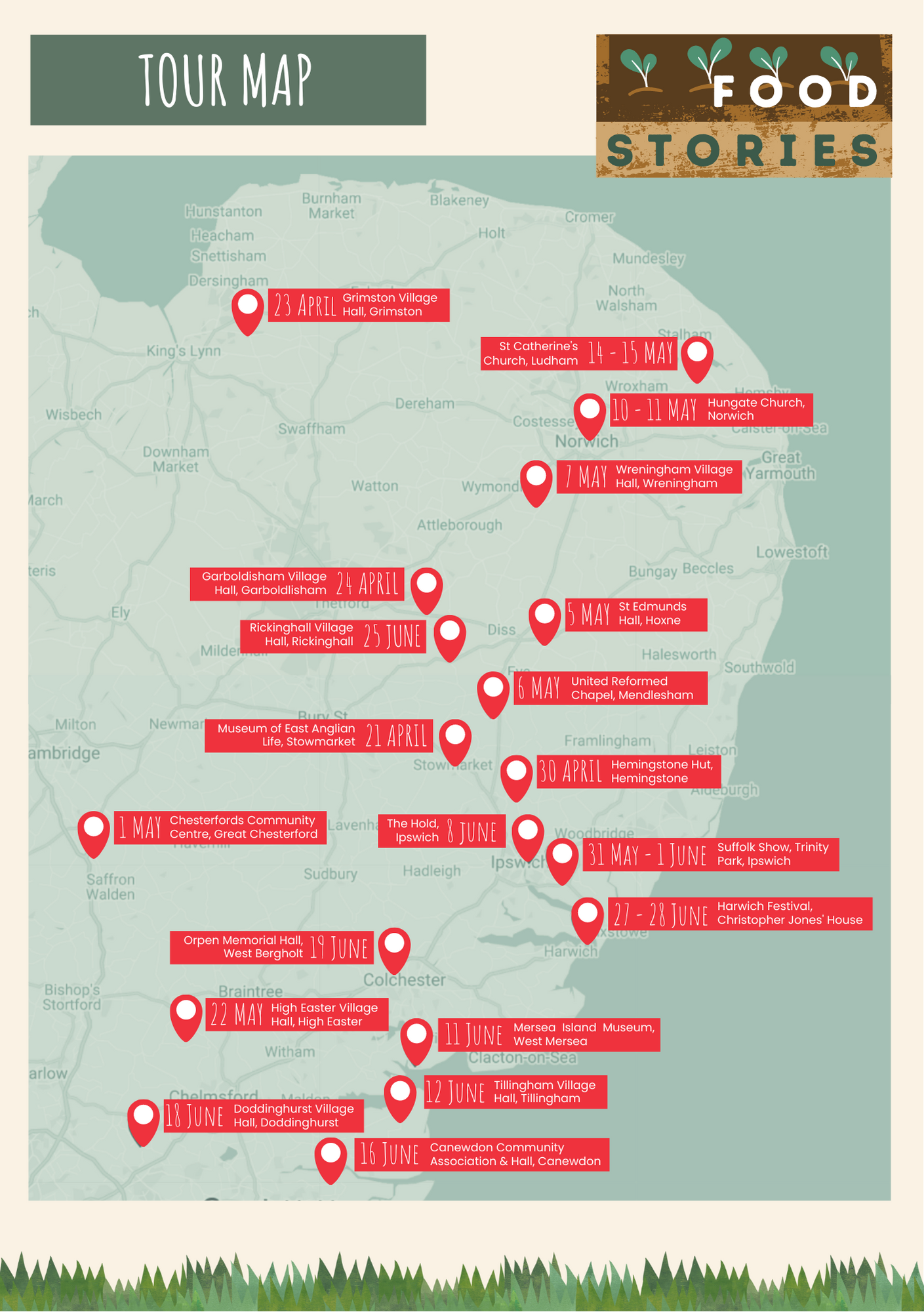
Designing for 20 different venues, each with varying spatial, technical, and access constraints.
Creating a highly tactile, social experience that encouraged conversation rather than passive viewing.
Balancing research-led content with emotional storytelling, making academic material accessible and engaging.
Ensuring all elements were robust, portable, and quick to install, without losing warmth or character.
Key components & design decisions
1. Exhibition concept & interpretation
I led the exhibition’s design and interpretation, developing a narrative rooted in everyday experience rather than a chronological food history. The focus on shared memories—meals, words, and rituals—created an informal, welcoming atmosphere. I researched the stories, curated the objects, and wrote interpretive text, balancing academic research with an accessible, conversational tone.
2. Branding & visual identity
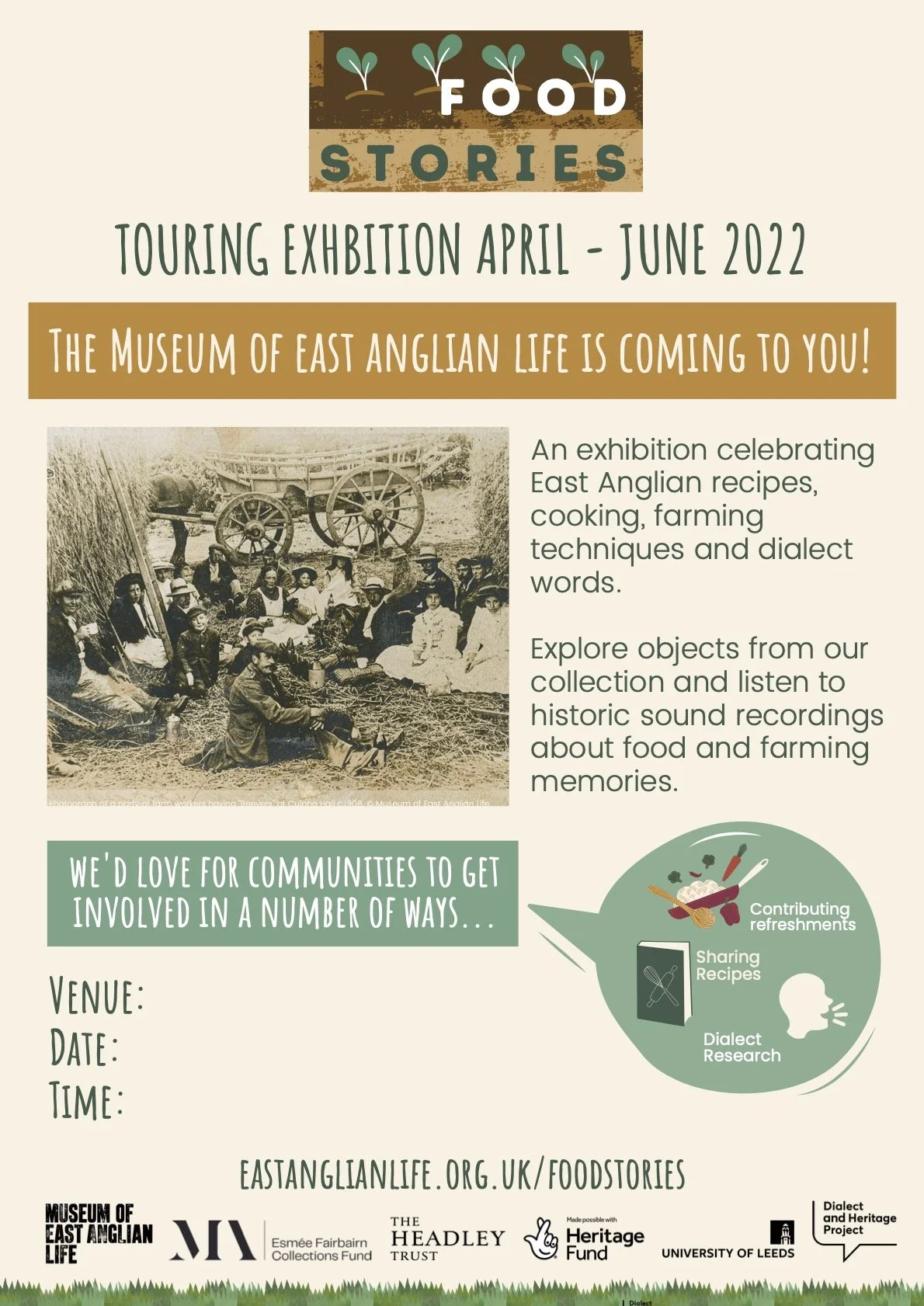
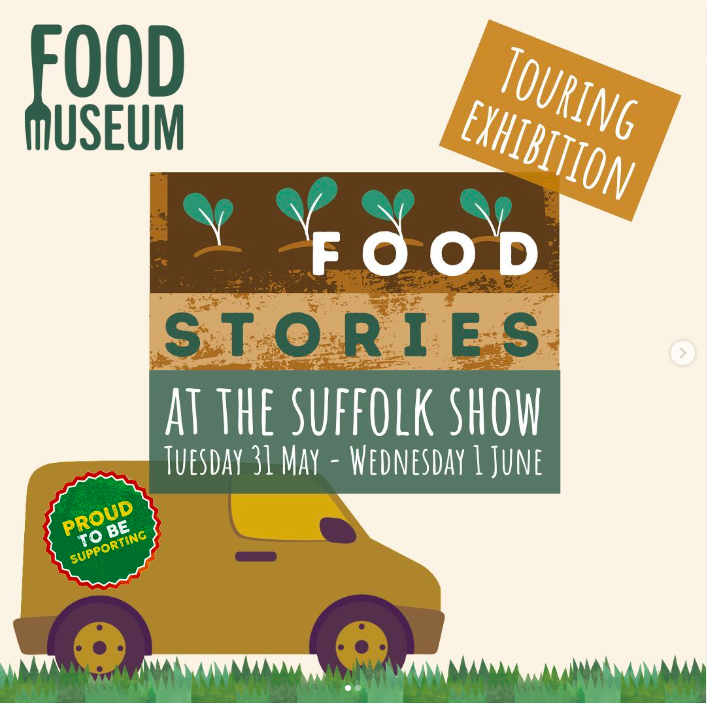
I designed the Food Stories logo and a flexible visual identity that could adapt easily across touring venues. This extended to exhibition graphics, signage, and marketing materials, positioning the exhibition as both community-led and a clear expression of the museum’s evolving identity.
3. Table-led spatial design
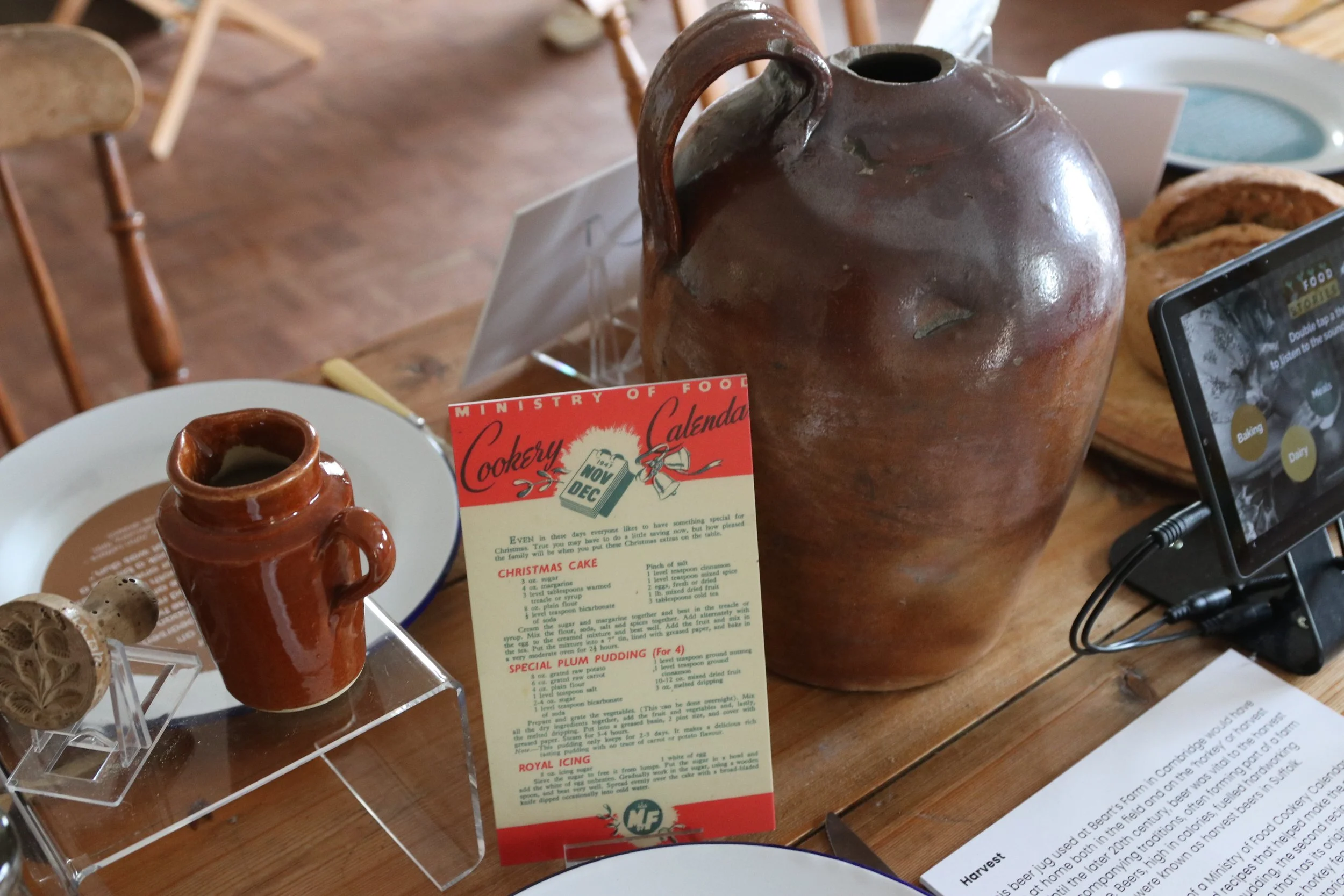
A large, portable farm table formed the centre of the exhibition. Sourced to evoke a grandparent’s kitchen table, it shaped the layout and encouraged visitors to sit, linger, and talk. All supporting graphics and object placements were designed to reinforce this shared, domestic experience.
4. Object integration & bespoke elements
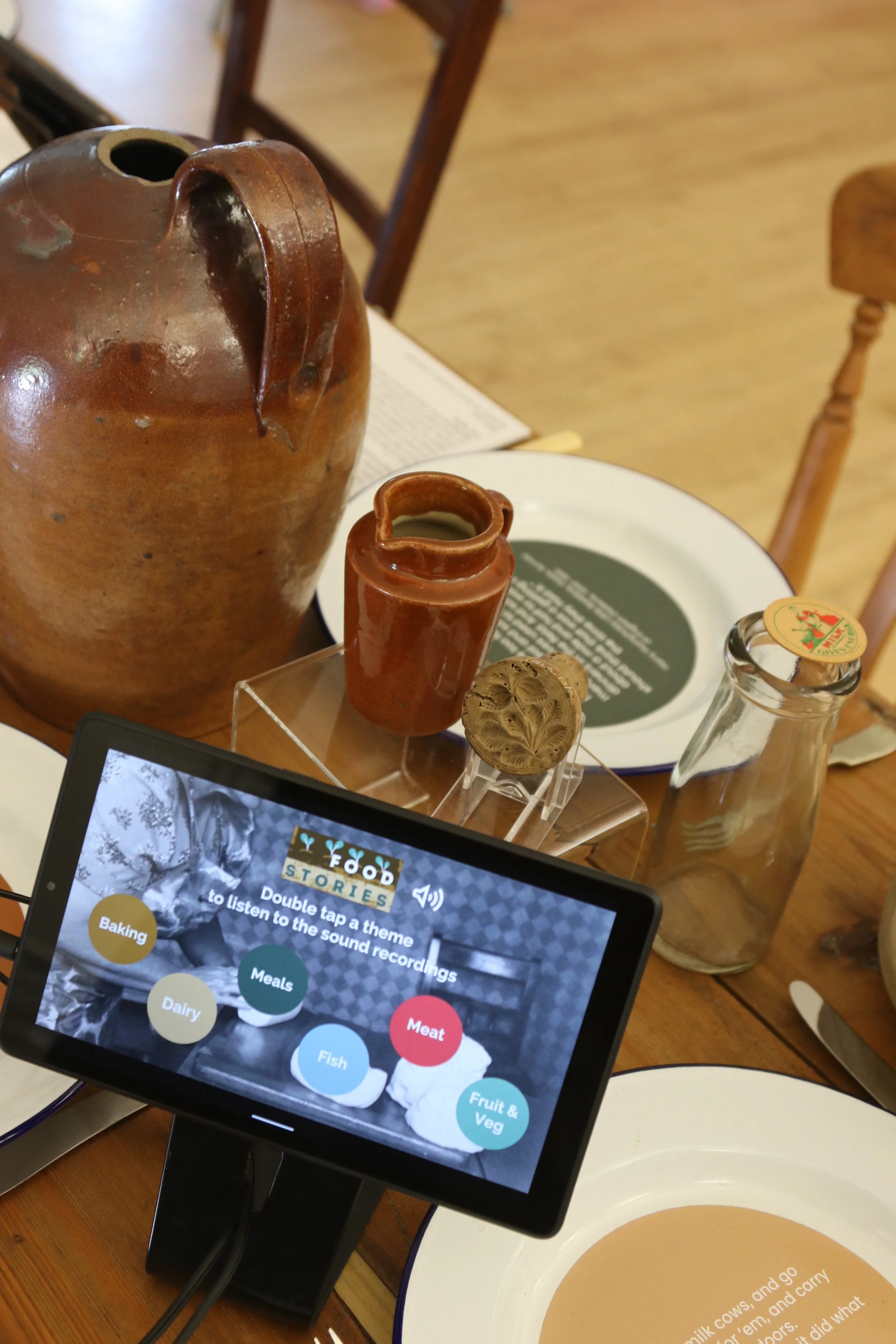
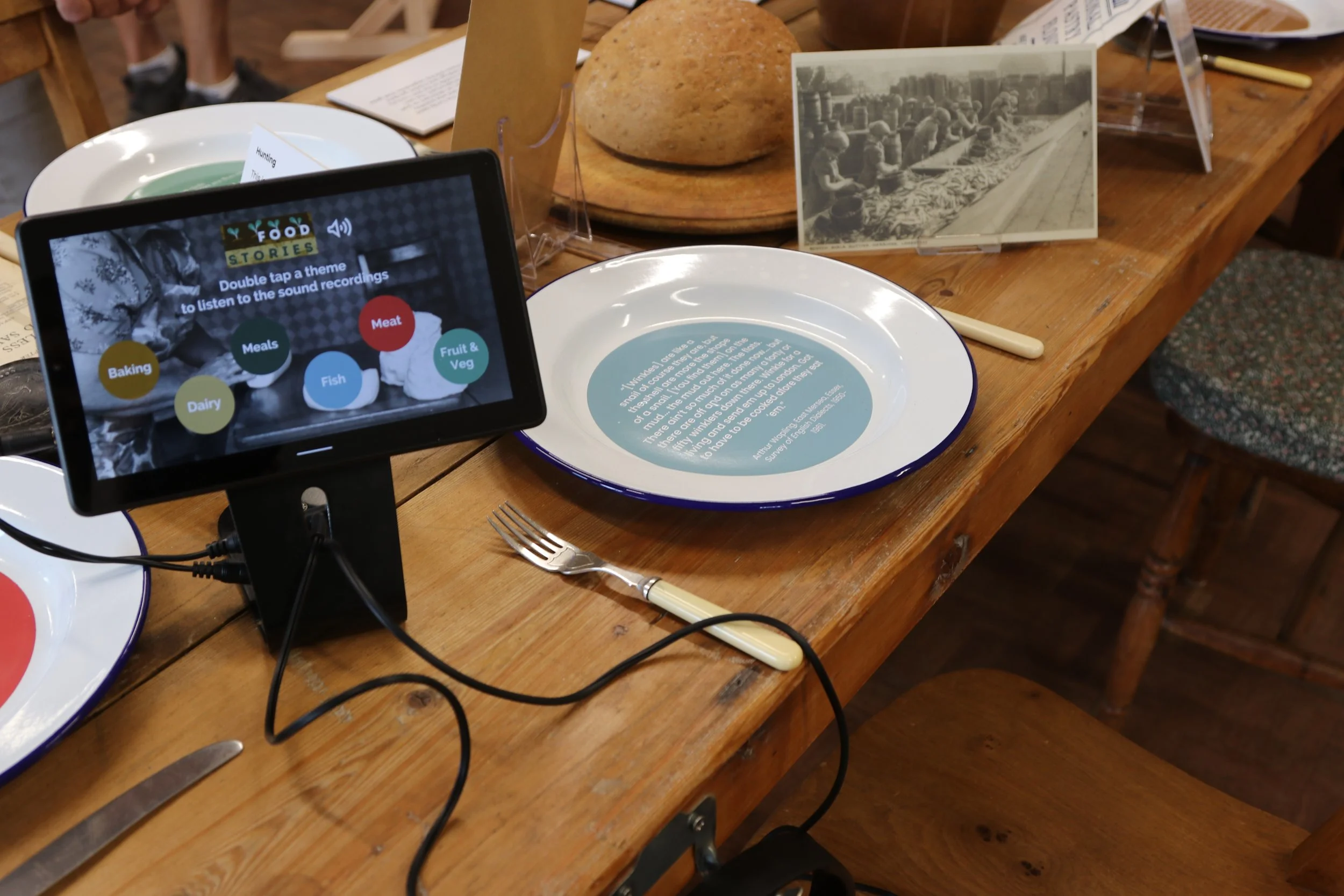
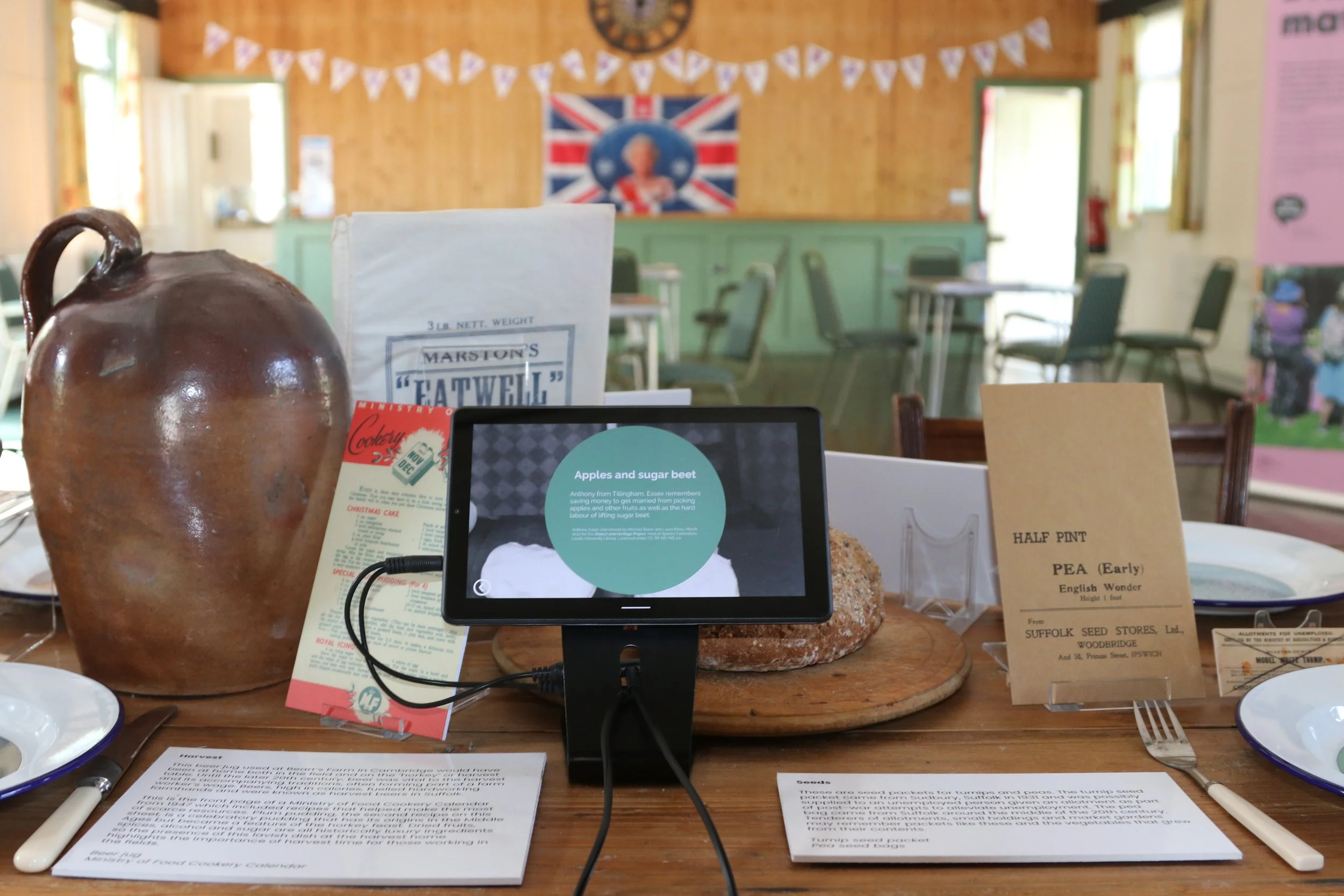
Objects were chosen for their ability to spark recognition and conversation. Alongside standard labels, I designed bespoke elements—including printed dinner plates featuring stories—to blur the line between interpretation and everyday tableware, encouraging tactile engagement.
5. Interactive audio & research integration
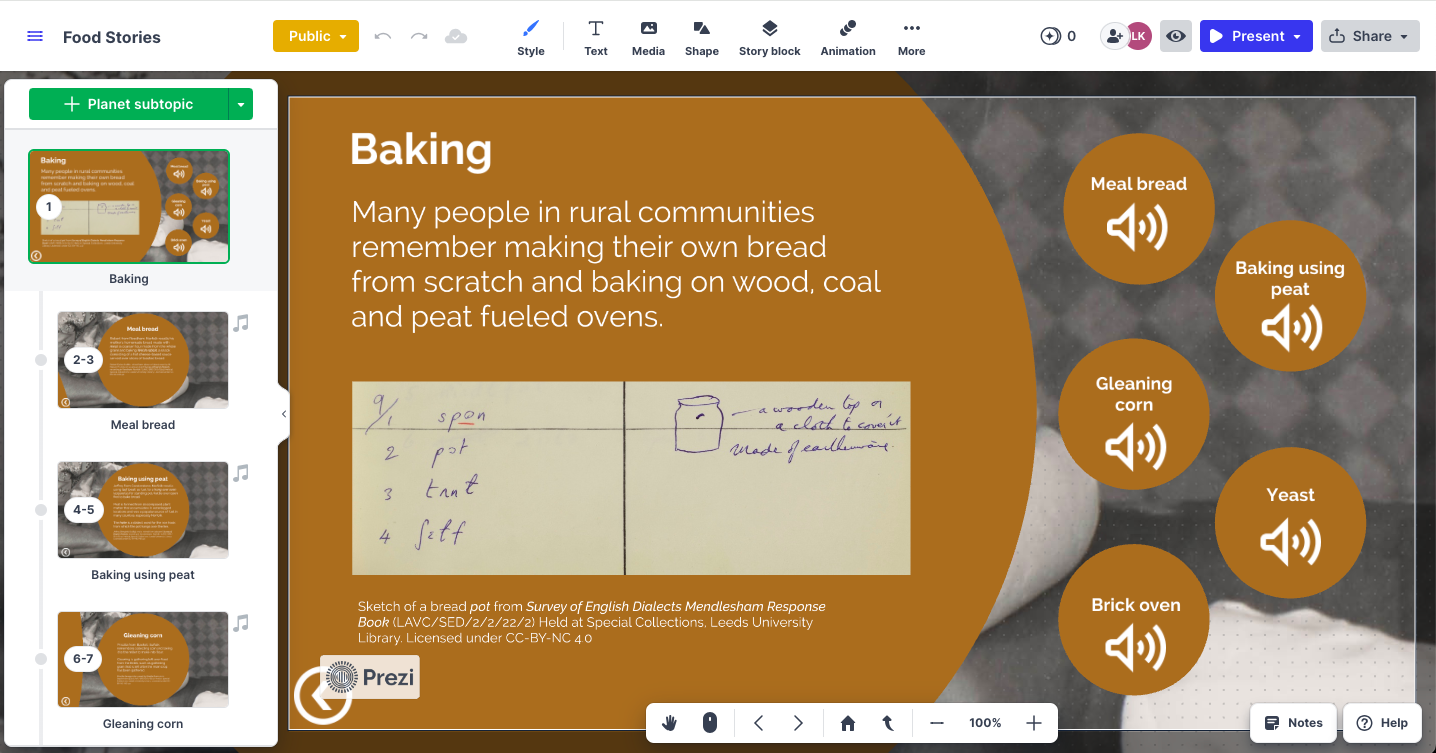
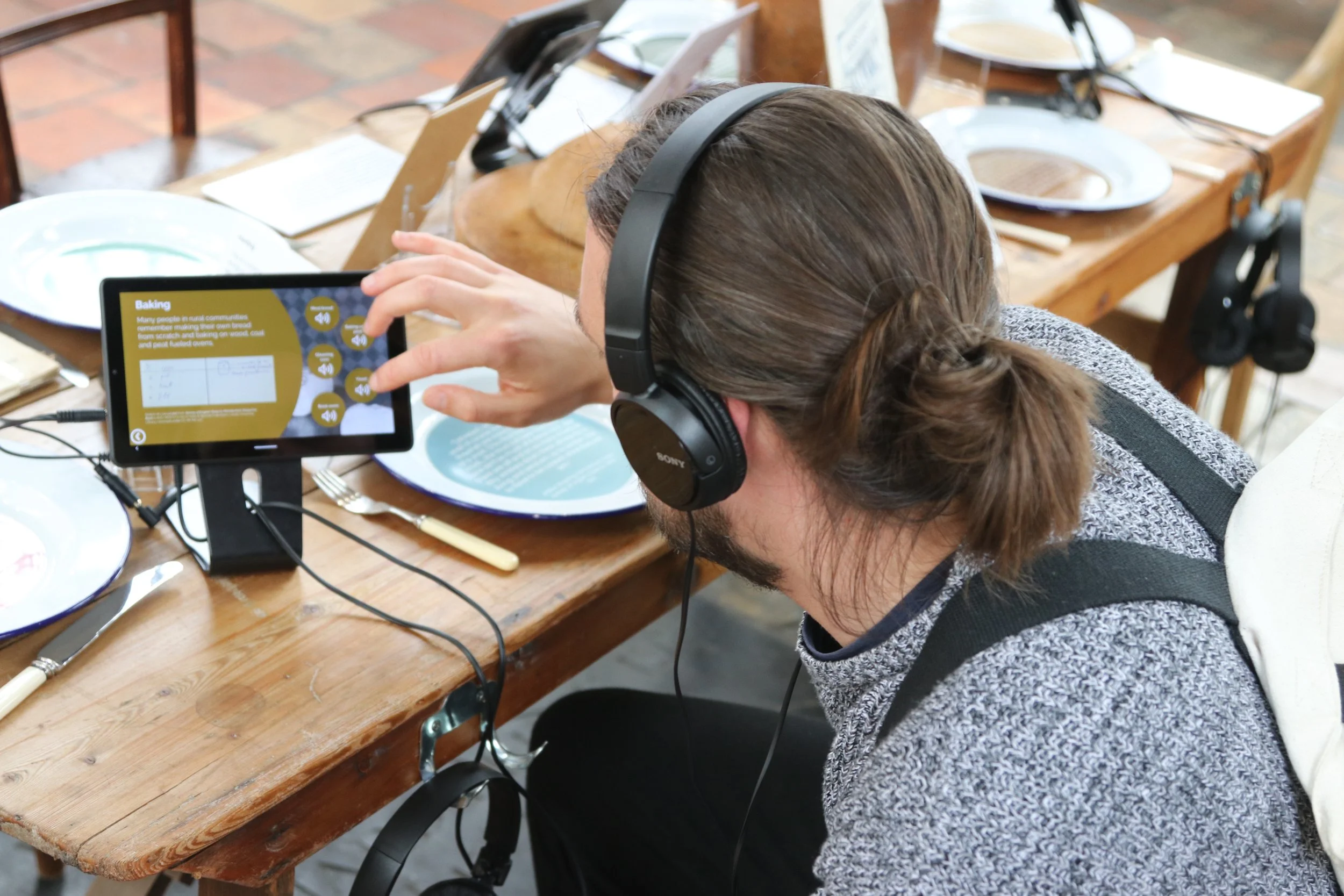
Developed and designed a simple, robust audio-visual system that allowed visitors to select and listen to recordings while handling related objects. Drawing on oral histories and dialect research from the University of Leeds’ Survey of English Dialects (1946–1978). The audio was edited to connect language, place, and food traditions in a tangible way.
Colour palette & material references
The colour palette was carefully chosen to feel warm, organic, and rooted in natural materials. I drew directly from farming and food production, using soft beige tones to represent bread and dairy, greens associated with fresh produce, and reds and blues linked to meat and fish. These colours were carried through the interactive system too — the interface colours matched the dinner plates displaying quotes, helping visitors connect each place setting to a specific type of food and its related audio story.
Outcome
Food Stories toured 20 venues in Spring 2022, creating a tactile, visual, and auditory experience that resonated strongly with local communities. The exhibition successfully demonstrated how the newly rebranded Food Museum could honour regional heritage while presenting food as a powerful lens for storytelling, identity, and shared memory.