
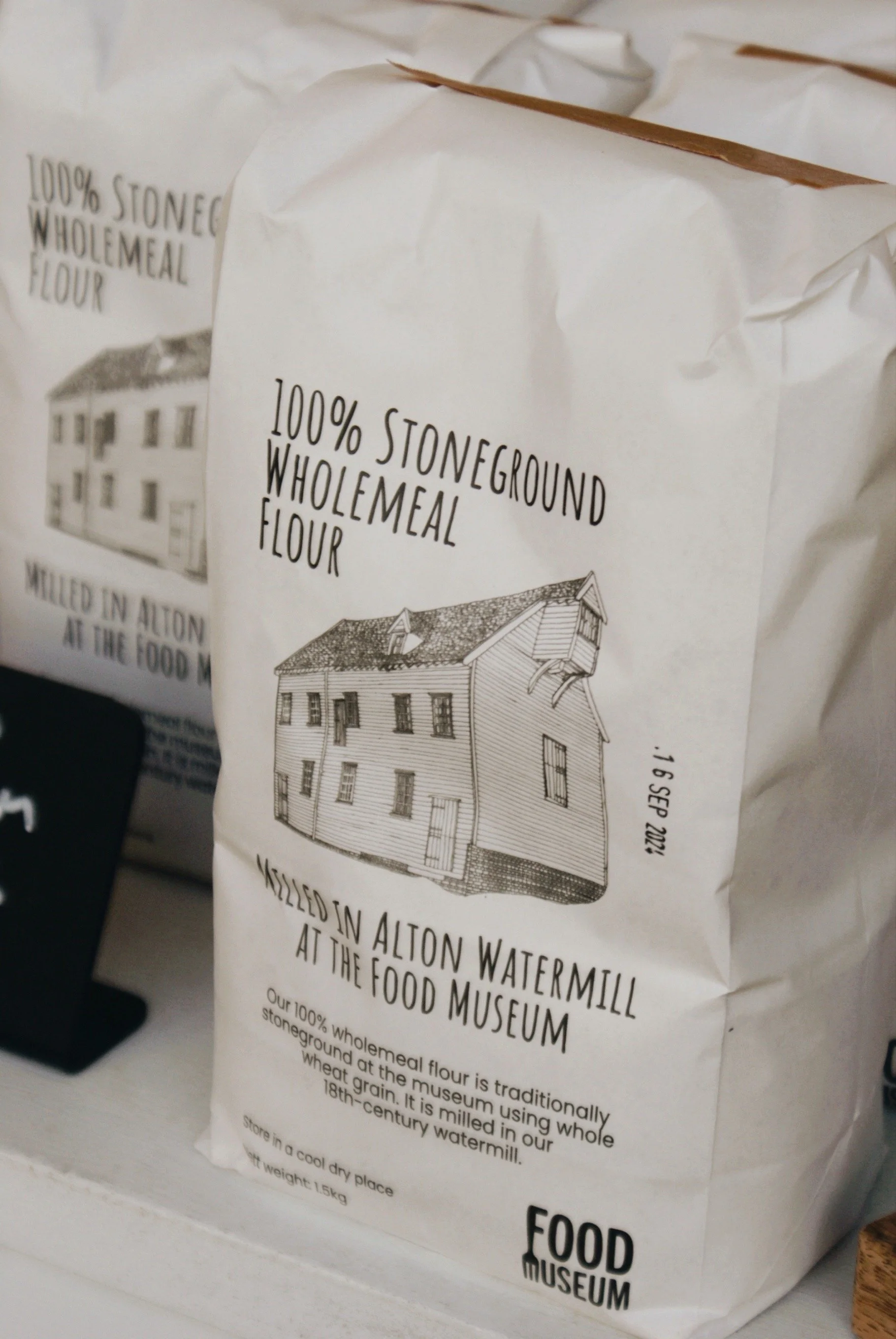
Food Museum Flour Bag
Alton Watermill Flour — Retail Packaging Design (Food Museum)
Packaging Design, Illustration & Interpretation
About the project
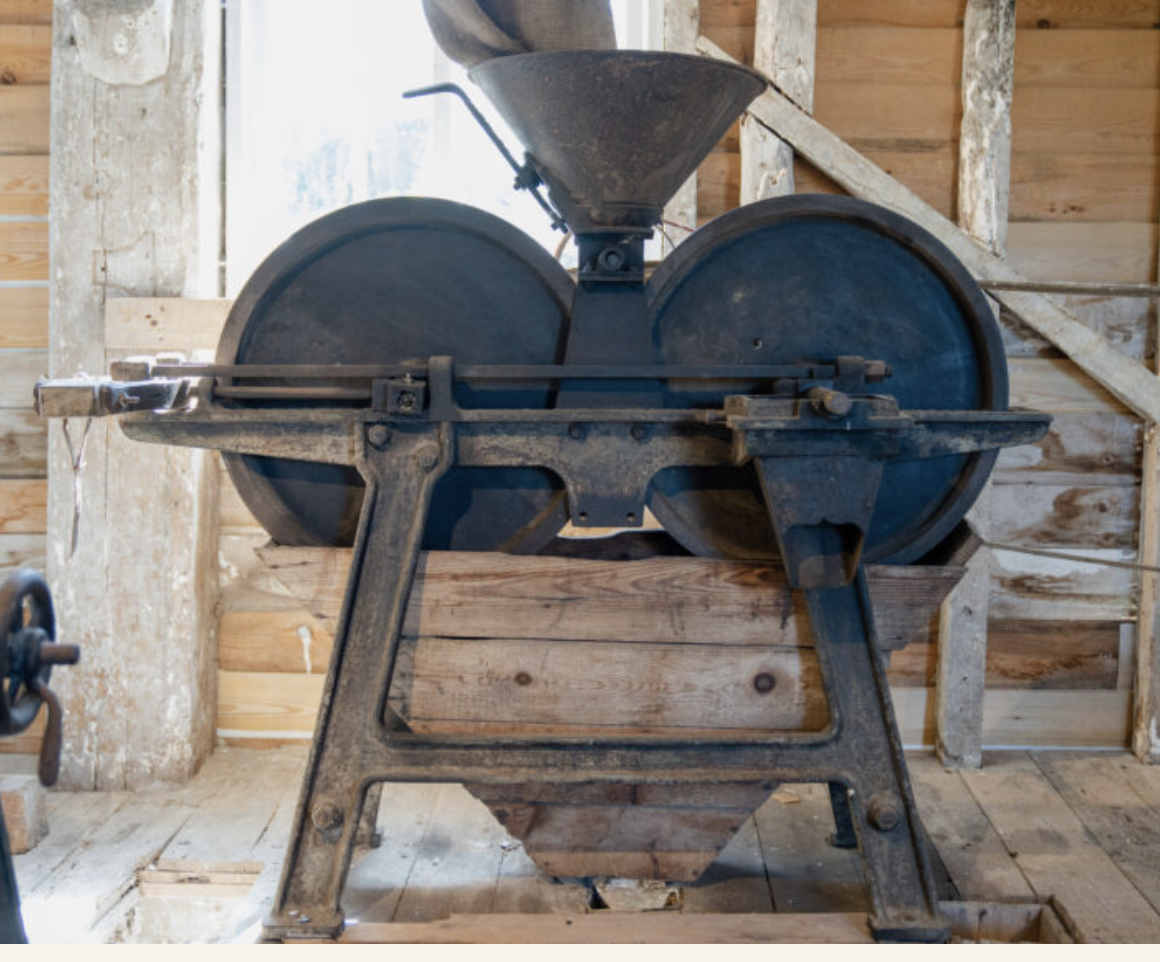
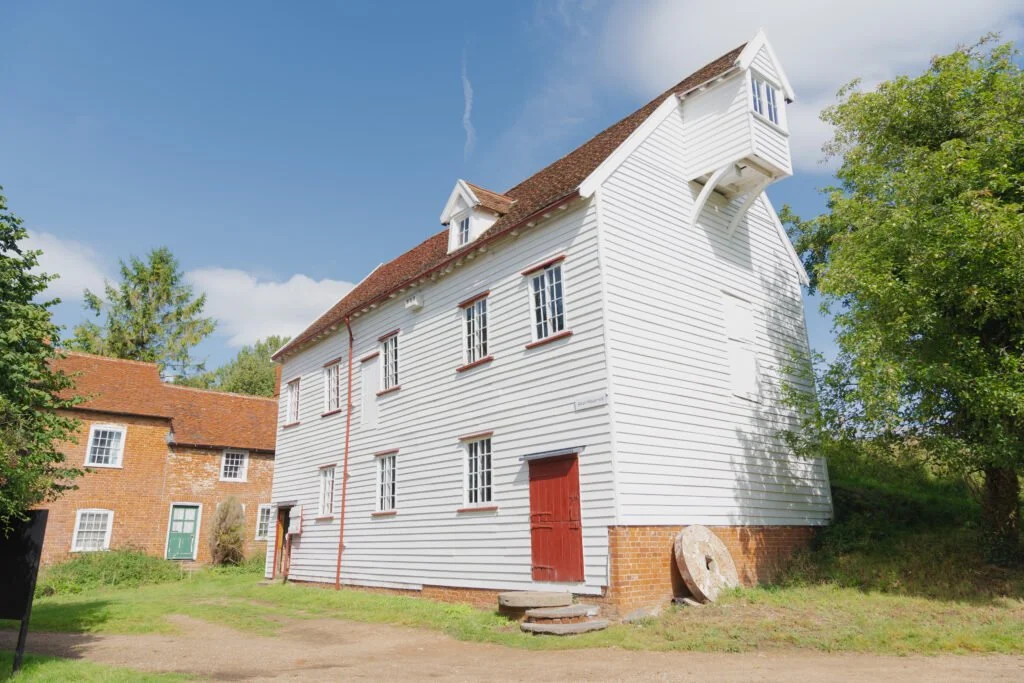
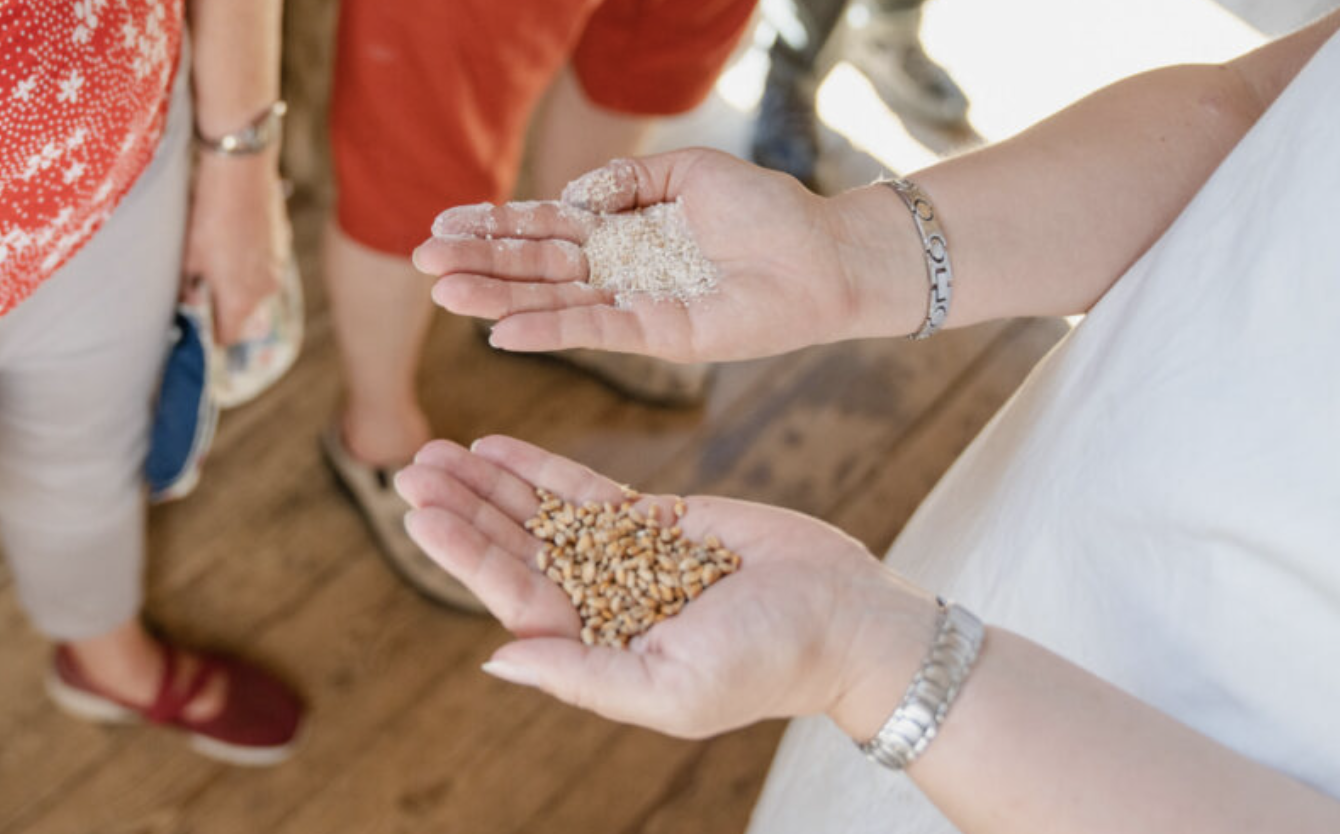
This project involved designing retail packaging for flour milled on-site at the Food Museum and sold in the museum shop. The flour is traditionally stoneground using whole wheat grain in Alton Watermill—an 18th-century, water-powered mill preserved and operated at the museum.
The packaging needed to function as both a practical retail product and a storytelling tool, communicating provenance, craft, and the museum’s role in preserving working food heritage.
Considerations
Designing within fixed bag dimensions set by the manufacturer, ensuring all content worked precisely within the print template.
Keeping the design simple and restrained, so it felt appropriate to the 18th-century watermill and traditional milling process.
Aligning with the Food Museum’s existing fonts and branding, maintaining consistency across retail, exhibitions, and interpretation.
Balancing heritage storytelling with retail clarity, so the bag worked both as a product and an interpretive object.
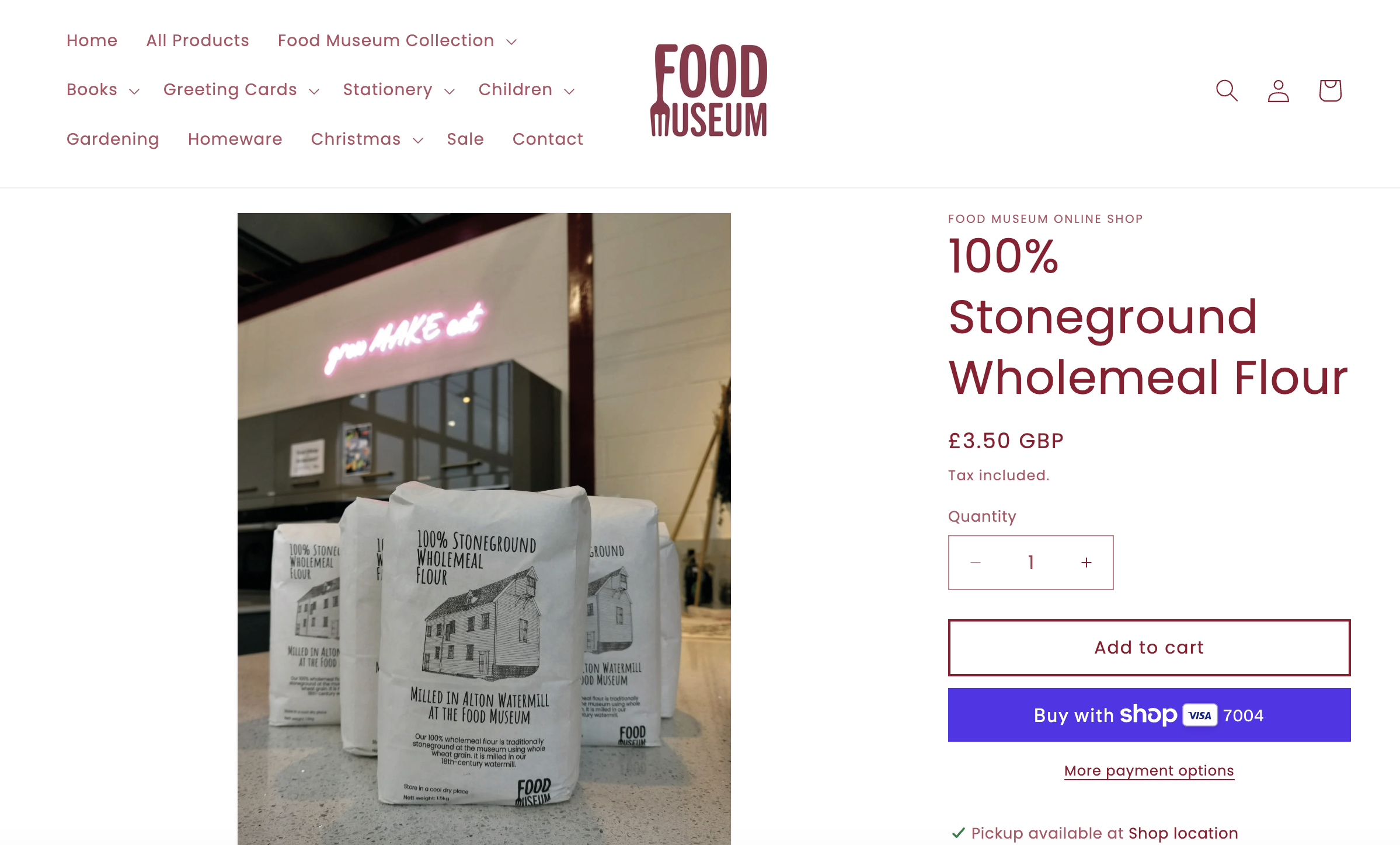
Key components & design decisions
Interpretive packaging designed to tell the story of the flour, the watermill, and the museum in a clear, concise way.
Simple, restrained visual language rooted in natural colours and materials, appropriate to an 18th-century working mill.
Clear provenance messaging, tracing the flour from grain to mill to museum.
Practical retail design that works within fixed bag dimensions and supports easy shelf reading.
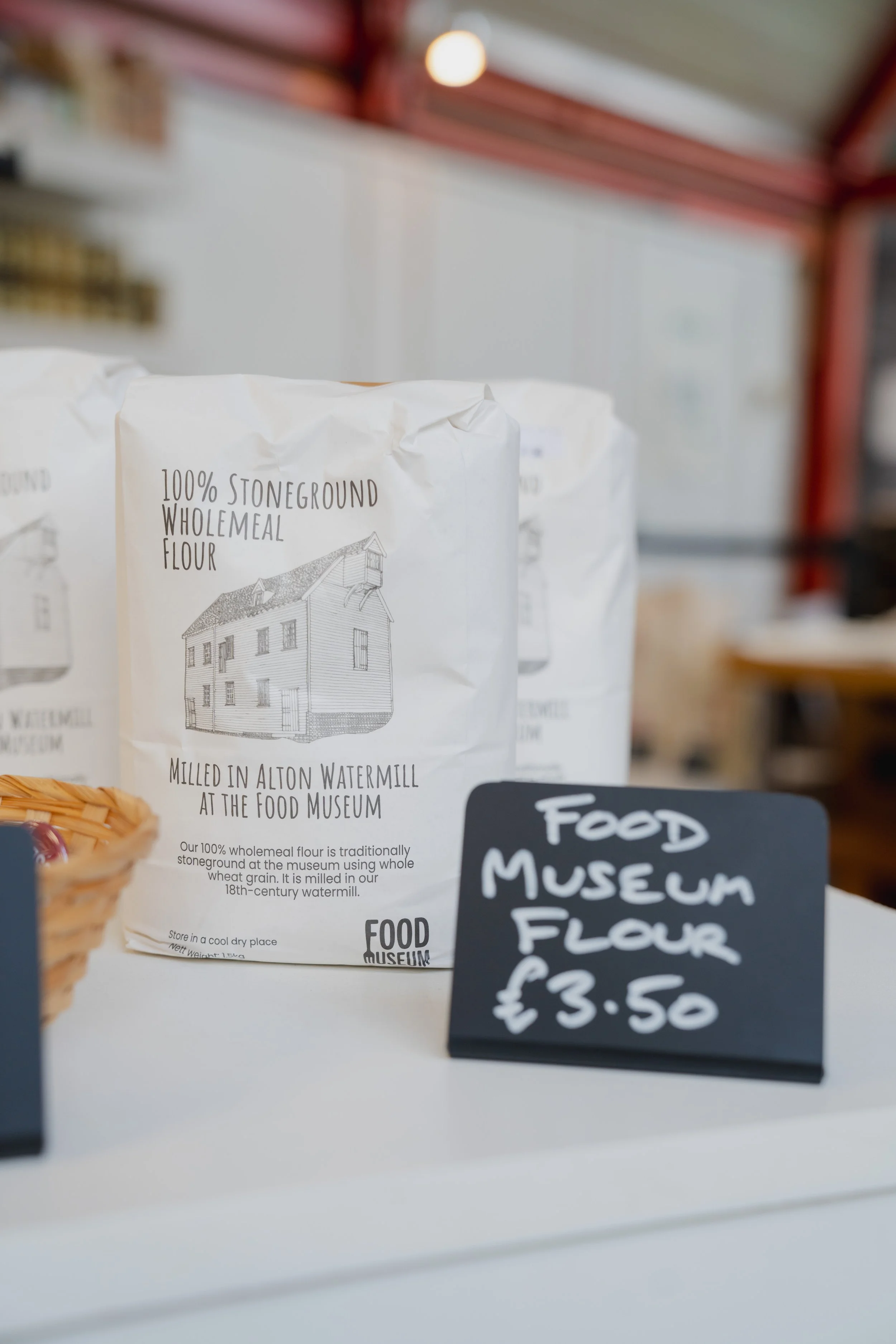
Outcome
The finished flour bag supports the museum’s retail offer while extending its interpretive work beyond the galleries. By purchasing the flour, visitors take home a tangible connection to East Anglia’s agricultural history and directly support the ongoing care of the museum’s 18th-century watermill.